Skin cancer isn’t just one condition; many types exist. These include:
Basal cell carcinoma
Squamous cell carcinoma
Actinic keratoses
Melanoma
Basal cell carcinoma and squamous cell carcinoma are by far the most common,
but melanoma is the most serious. Early detection of any of these cancers is
crucial as they can be treated and cured. If allowed to spread, they can be
deadly.
What happens during a skin cancer screening?
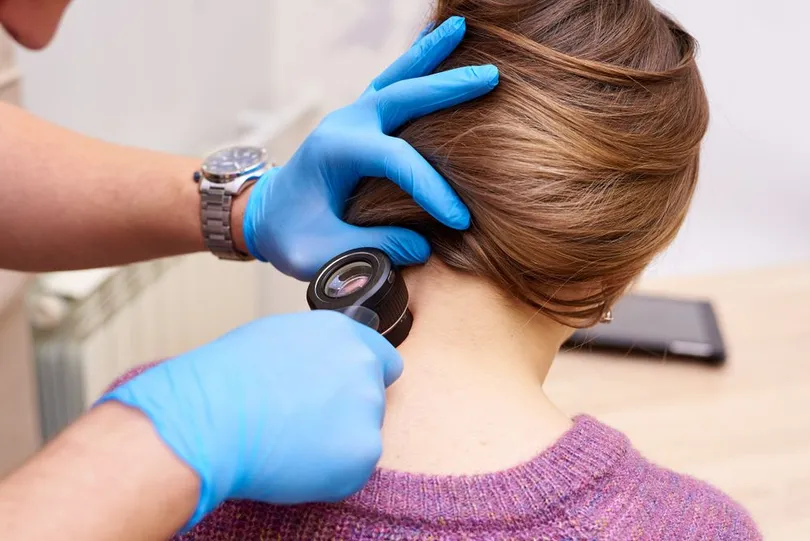
Dr. Tadicherla provides a full-body screening that takes about 10 minutes.
You’ll undress and put on a hospital gown. She then carefully looks at areas
typically exposed to the sun, such as your arms, face, neck, hands, and legs.
She’ll also look at areas that are hard for you to inspect, but that can
develop melanoma or other cancerous lesions. This includes your back,
buttocks, armpits, and scalp. Even areas that don’t often see the sun, such as
between your toes, are inspected, as melanoma can appear anywhere.
What are the signs of skin cancer?
Most skin cancer appears as a change in your skin. Always alert Dr. Tadicherla
to any moles or growths that are new or have changed over time. If you have
patches of skin, growths, or moles that itch or bleed, also bring these to her
attention.
Will I need a skin biopsy?
The skin cancer screening visual exam helps Dr. Tadicherla identify any
suspicious lesions that need a biopsy. If she suspects a mole is cancerous,
she’ll numb the location and remove as much of it as possible. She then sends
the sample to a lab where it’s tested for cancer cells.
How often should I get a skin cancer screening?
A yearly exam is a good idea, especially if you have a high risk of developing
skin cancer. Factors that put you at risk include:
Fair skin that freckles and burns easily
A family history of melanoma
Unusual lesions or moles detected in the past
You use, or have used, tanning beds
A high concentration of moles
A history of sunburns
Don’t wait for a yearly exam if you detect an unusual looking mole. Dr.
Tadicherla may recommend twice yearly exams if you’ve been diagnosed with
basal cell or squamous cell carcinoma in the past.
Keep your skin healthy with routine skin cancer screenings at Wesley Chapel Dermatology. Call our Wesley Chapel, FL office at (813) 606-4144 to schedule an appointment!
Wesley Chapel Dermatology
Address
2336 Crestover Ln Suite 101, Wesley Chapel, FL 33544